



by Nicolas Orosco
When you show up to do your civic duty and cast your vote in 2026, you will find more decisions than just candidates. While other states have ballot measures, New Mexicans vote on constitutional amendments that propose changes to the state constitution. This year, four separate constitutional amendments are on the ballot, and voters will decide whether to approve them.
So let's take a look at some of the constitutional decisions facing New Mexicans on the ballot this year.
So, what's on the ballot?
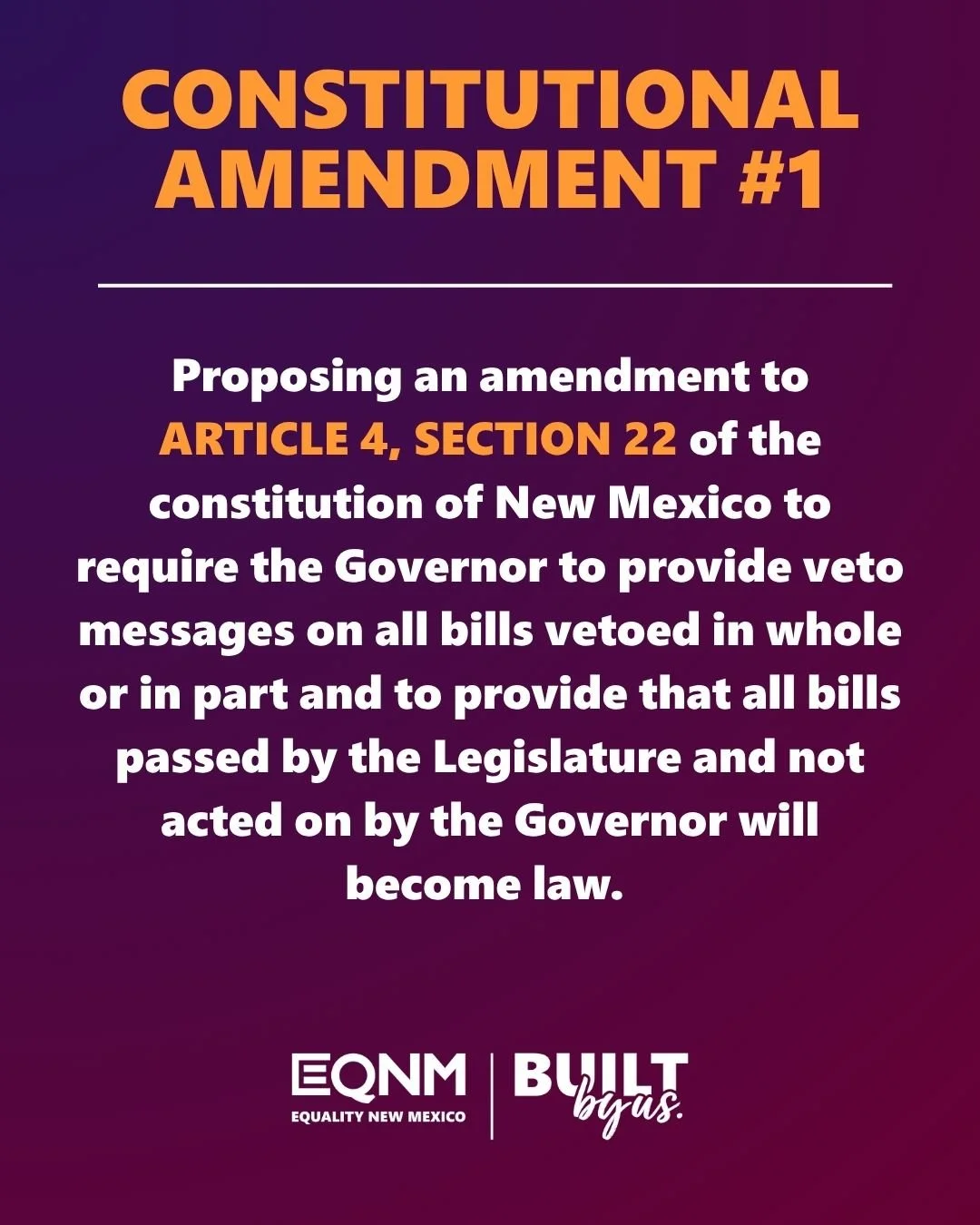
Constitutional Amendment #1 seeks to change how bills become law when they reach the governor’s desk. New Mexico is one of 11 states where governors can “pocket veto” a bill by simply doing nothing once the bill reaches the governor's desk. When a bill is pocket vetoed, there is no way for the legislature to challenge it, even with a majority.
This amendment would change the system so that any bill passed by the legislature must be officially vetoed, or it will automatically become law without the governor's approval. Advocates argue it would increase transparency by making governors explain why certain bills were vetoed, while opponents argue that asking the governor to give a “Substantive explanation” for each veto is too vague a requirement and won't actually increase transparency.
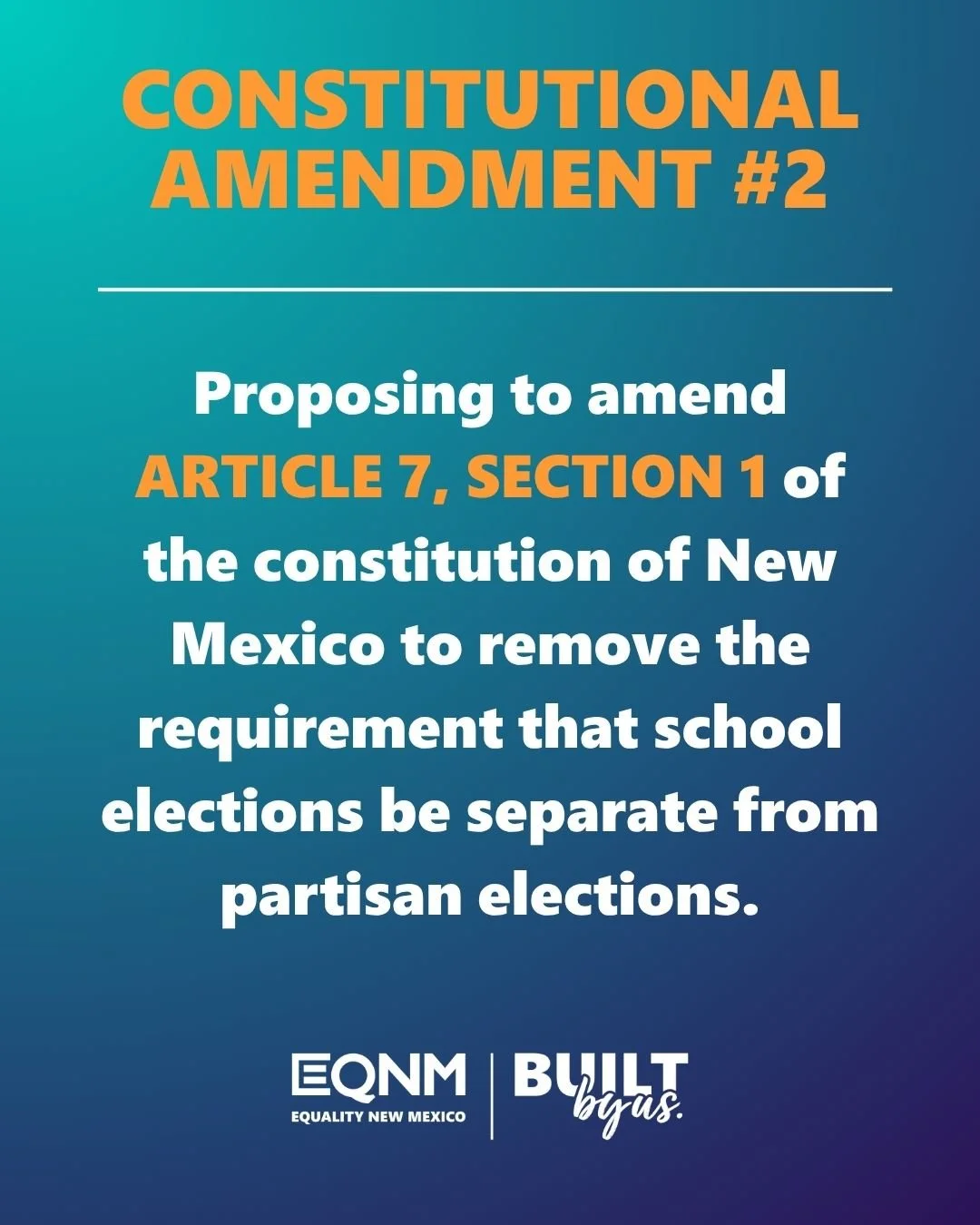
The second proposed constitutional amendment aims to change school elections, ending the requirement that they be kept separate from regular partisan elections. This would allow schools to place financial proposals, such as school bonds, on the same ballot as partisan elections, such as the upcoming midterms. Proponents argue it would help increase voter participation in school elections, while opponents claim it would cause voter fatigue by asking voters to make more decisions on a single ballot.
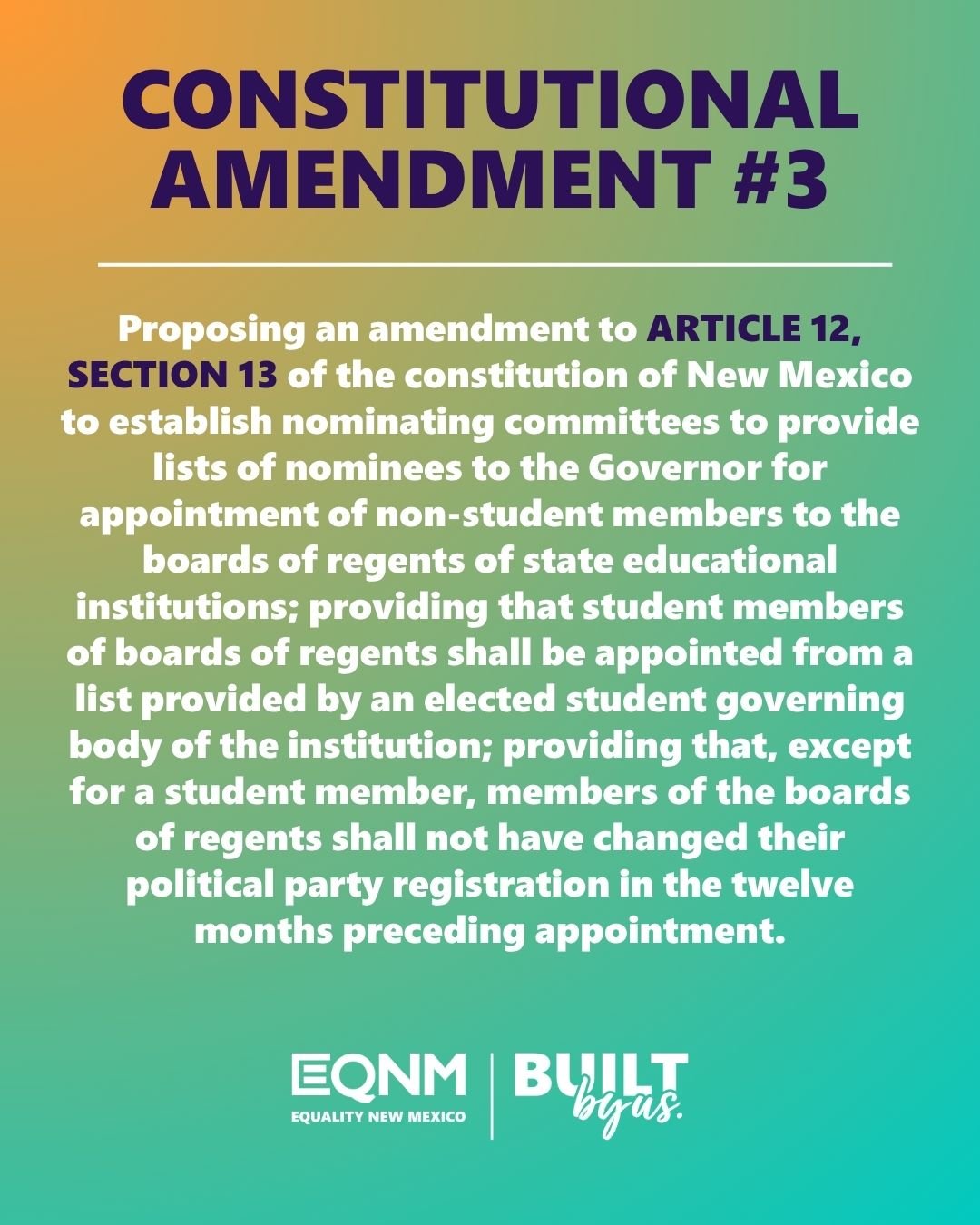
The third proposed amendment for this year seeks to change how non-student members of the Boards of Regents at state educational institutions, such as UNM, are appointed.
Previously, the governor could select these regents without input from the student body. But lawmakers want to change the process so that elected student representatives at these institutions can create a list of potential candidates for the governor to choose from.
Currently, the governor chooses these regents before they are confirmed by the Senate. The governor's choices are already subject to certain limits, such as no more than three of the five board members sharing the same political affiliation. Constitutional Amendment #3 would add another requirement for regent appointments: they must not have changed their political party affiliation within the last twelve months.
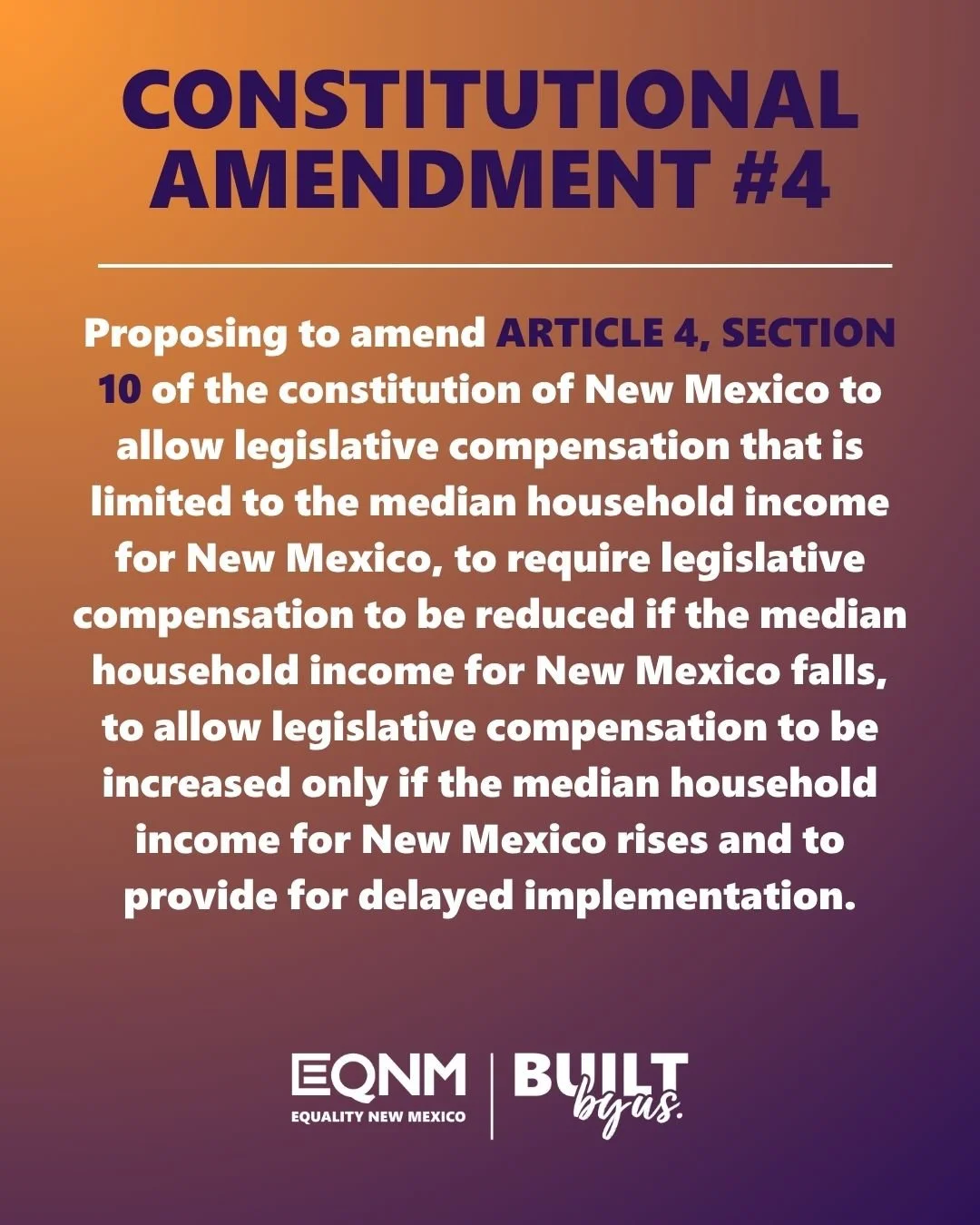
The fourth and final constitutional amendment on the 2026 ballot would end New Mexico’s status as the only state whose legislature serves unpaid. This would not be the first time New Mexico has considered paying its legislators. The last time voters considered this change was in 1990, when it was Constitutional Amendment #3. This time, not only would the legislature be paid, but legislators' pay would also be tied to New Mexico's median household income.
This is the one constitutional amendment on the ballot this year that EQNM has taken an affirmative stance on, and that is due to the direct, tangible, and impactful outcomes for our LGBTQ folks and other marginalized communities across New Mexico. An unpaid legislature means: that the queer single parent working in hospitality can’t afford to go two months without an income, that the trans advocate paying off student loans can’t afford to even think about running for office – an unpaid legislature means an elected body that is not representative of the state that it is representing. Voting yes on Amendment 4 means a vote to increase the representation of voices who are historically underrepresented in our state.
Advocates argue that paying legislators would allow people of a lower income to run for office, as many New Mexicans cannot afford to serve in an unpaid position while supporting their families. Opponents argue the amendment would give incumbent legislators a financial advantage over new candidates. If passed, it would go into effect in January 2029.
A Look Outside New Mexico
As we prepare to vote for our constitutional amendments, many states are also preparing to vote on important ballot measures, especially those affecting transgender people. Sports and healthcare seem to be major battlegrounds in the fight over transgender rights, with public schools quickly becoming a hotbed of accusations and conspiracies targeting transgender people.
In Arizona, Colorado, Washington, and Nebraska, voters will be deciding on measures that would restrict transgender people from playing sports in ways that align with their gender identity. Washington will also decide on a law that would force teachers to “out” LGBTQ children to their parents. In Colorado and Missouri, medical care for transgender people is also facing restrictions, with Missouri hoping to add a ban on transgender medical care to its state constitution.
